

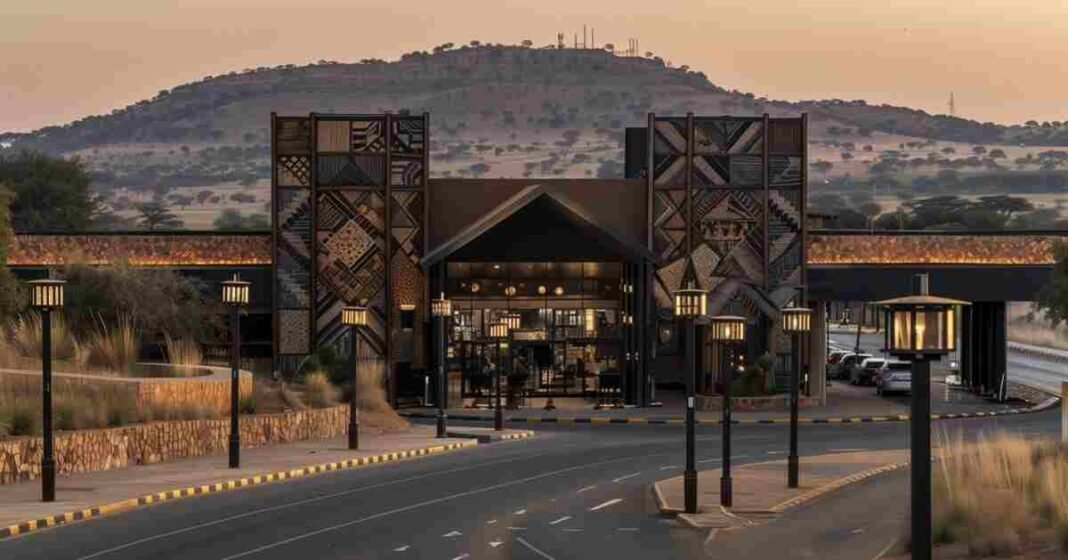
The Africa–Europe Business Corridor is entering a defining phase as both regions push forward with new investments, green manufacturing partnerships, and cross-border trade initiatives that promise to reshape economic ties. What began as a diplomatic framework has now evolved into a serious business ecosystem where companies, governments, and development agencies are moving quickly to secure long-term cooperation.
Launched during a high-level economic summit in Nairobi, the latest phase of the Corridor focuses on the co-development of sustainable manufacturing hubs across Africa. The partnership aims to support industries such as solar panel assembly, eco-friendly construction materials, electric mobility components, and agricultural technology systems. European leaders see Africa as a fast-growing frontier for clean-tech expansion, while African nations see an opportunity to bolster local industrial capacity, create job opportunities, and reduce import dependence in critical sectors.
What makes this renewed momentum notable is the scale of investments already underway. Several European manufacturers have announced plans to establish production lines in Kenya, Rwanda, and Ghana, supported by blended financing tools that minimize risk for early-stage ventures. These facilities are positioned not only to serve African domestic markets but also to integrate with Europe’s expanding green supply chains. The goal is to create mutual resilience—Africa gains industrial modernization, and Europe gains diversified, cost-effective production networks aligned with sustainability goals.
Another driving force behind the corridor’s acceleration is Africa’s rising demand for clean energy solutions. With the continent targeting ambitious renewable energy adoption rates, the need for localized solar manufacturing and storage technologies has intensified. Europe’s experience in scaling green infrastructure places it in a strong position to collaborate, while African nations bring rapidly expanding markets and strategic geographical advantages. Joint ventures in photovoltaic manufacturing and battery recycling are already being drafted, signaling a future where Africa becomes an active producer, not just a consumer, of green technology.
Trade facilitation is also receiving significant upgrades. Governments across both regions are working on fast-tracking customs integration, digital trade documentation, and tariff simplification. These measures are expected to reduce export delays, making cross-continental trade far more efficient. The EU’s push for ethical supply chains aligns with Africa’s growing emphasis on traceable, sustainable production—creating a natural synergy in trade priorities.
In addition, the corridor is presenting opportunities for small and medium-sized enterprises that previously struggled to enter global markets. New accelerator programs are being introduced to support African startups in sectors like climate tech, agritech, and sustainable manufacturing. European companies, on the other hand, gain access to dynamic entrepreneurial ecosystems and the chance to co-create solutions tailored for emerging markets.
The long-term implications of the Africa–Europe Business Corridor could be transformative. If current commitments materialize as projected, Africa may witness the emergence of multiple green industrial clusters that boost exports, strengthen regional value chains, and stimulate local economies. For Europe, this partnership offers diversification at a moment when global supply chain stability remains a strategic concern.
Despite challenges such as regulatory harmonization and infrastructure gaps, the political will on both sides appears stronger than ever. With climate priorities rising globally, the business corridor represents a unique opportunity to redefine intercontinental economic cooperation through a sustainability-first lens.
As investments scale and projects break ground, the Africa–Europe Business Corridor is no longer a distant vision—it is becoming one of the most influential green manufacturing alliances shaping the future of global trade.

