

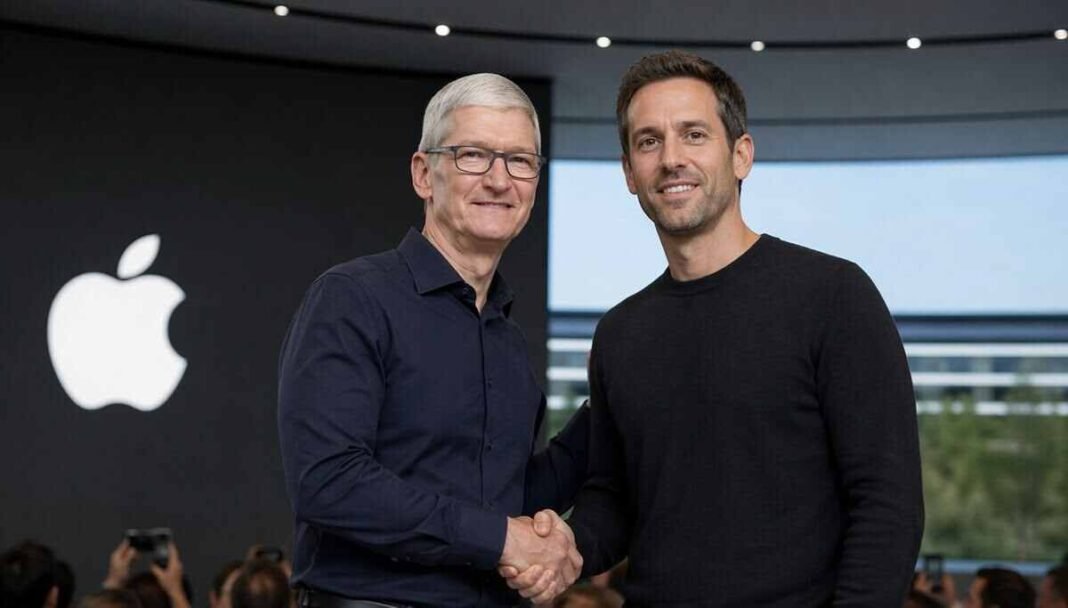
Today, John Ternus begins his official reign at Apple, assuming the role of CEO for the first time, succeeding what has been an unprecedented 15-year tenure by CEO Tim Cook. Coming just days before the Cupertino tech giant’s most expansive product showcase of the year, Ternus’ new job will have him carrying the responsibility of Apple’s $4+ trillion empire and the pressing necessity of closing the AI gap.
Meanwhile, Cook transitioned to the role of executive chairman, continuing to manage critical relationships with the White House and Chinese government while still being available for the new CEO. This transition has been planned and in the works for years; when announcing Ternus, Cook congratulated him by saying he has “the mind of an engineer, the heart of a leader and the soul of an innovator.
” Those words are indicative of the quiet confidence Apple’s board has in a long-time insider who for a quarter century has helped create the devices in our pockets every day. Ternus started at Apple in 2001 as a product design engineer, quickly climbing the ranks. He contributed in the design refinement of multiple generations of Macintoshes, led teams working on the iPad and AirPods, and finally managed the complete hardware engineering organization.
Ternus is described by co-workers as “someone who cares about the ones and zerosthat the user will never seeuntil the product “feels” right.” This expertise in the product is now put to use in Apple’s next chapter. The problem the business faces is obvious.
While Apple under Cook delivered truly integrated hardware and software, the company is being overtaken by the pace of generative AI, thanks to rivals investing heavily in large language models and conversational agents. Even the company’s planned update to Siri was held back, leading to new leadership and new collaboration with tech from Google’s Gemini units. Ternus takes the helm knowing that taking on device-running AI for real is not just about catching up, but forming a genuine business differentiator.
Cook has been saying for a while that having intelligence run on the device preserves privacy, and is faster than a cloud-based-only system. Making that a practical, everyday thing is the challenge for the new CEO. September 9 will be the first official metric of the new leadership. Apple has already been predicted to launch its first foldable phone with updated watches and a broadened Siri offering. Many of these efforts, like intelligent AirPods with cameras, smart glasses, and studio home experimentation, were led by Ternus in his former aegis. This event will measure whether the company can still execute both consistent quality and the flair that made Apple launches special. Beyond just the stage, Ternus encounters operational challenges.
The parts constrains have driven his costs up. He must manage production as it still shifting between multiple nations with hostilities mounting. He must compete for the talented engineers who are now decided among purely AI firms. He will rely on the senior executive team (many appointed by Cook) that he inherits with silicon and hardware pushed up from Peter’s ranks. But inside Apple things seem calm, not anxious. Cook departs as CEO of a services business that brings in upwards of $100 billion a year and a supply chain that remains the envy of many.

