

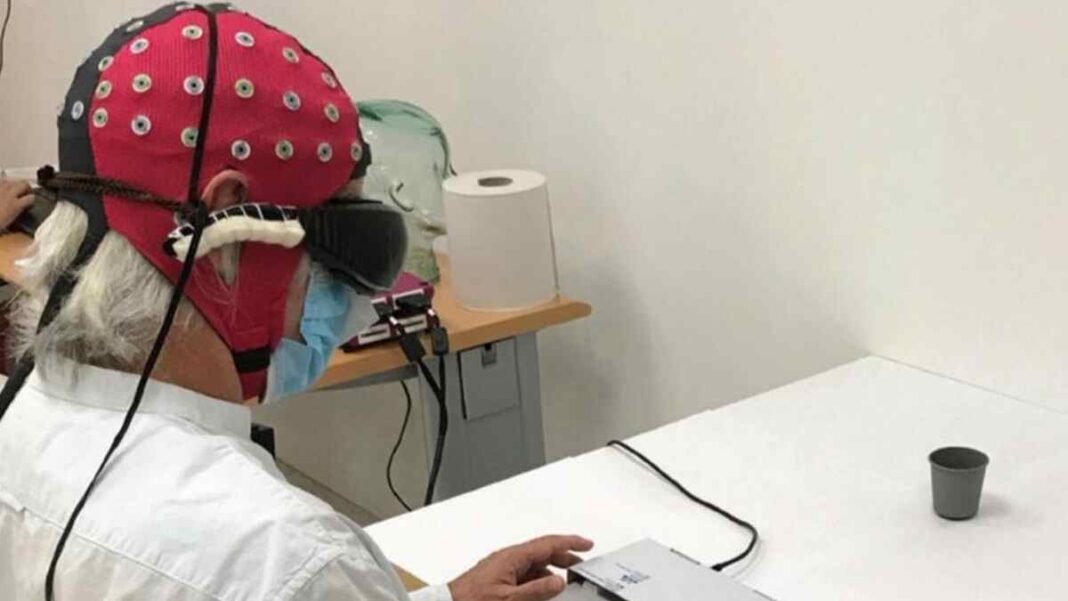
Researchers have announced encouraging results of an experimental treatment that enabled several adults with advanced blindness to recover modest visual function. The treatment uses gene therapy with specially-made glasses to help patients sense objects and even determine where they are despite extensive damage to the retina.
Published in October 2026 edition of The New England Journal of Medicine, the study looked at an experimental procedure called optogenetic therapy. The study enrolled 10 adults with retinitis pigmentosa a genetic disorder that slowly damages light-sensitive cells in the retina and can eventually result in severe vision loss.
Types of cell in the retina The normal retina has special light-detecting cells called photoreceptor cells. Light is converted into electrical signals in these cells, which travel along other nerve cells in the retina and to the brain through the optic nerve.
Advanced retinitis pigmentosa results in the loss of numerous photoreceptors. But, some retinal ganglion cells, which typically pass visual signals along to the brain, may still be present. The experimental approach made those residual cells sensitive to light.
This approach uses a gene-delivery method to deliver a gene that encodes light sensitivity via a protein called ChrimsonR, which is taken from an algae. This gene is then inserted into one eye by a genetically-modified viral vector. When the retinal ganglion cells that are still alive start making the protein, they are activated by certain wavelengths of light.
Goggles finish the job. A camera views the world and turns what it sees into patterns of amber light. The goggles shine those patterns into the treated eye, waking up the altered cells and assisting in the process of relaying information to the brain.
They don’t rebuild the former photoreceptors. Rather, they develop an alternative route for the rest of the cells to transmit minimal visual info.
The number of participants who showed an increase in their light sensitivity after treatment was seven of 10. Six of those showed a level of change that the researchers considered clinically meaningful.
Participants were also tested using behavioural assessments that aimed to establish whether the treatment would enable them to interact with objects. The tasks involved locating and reaching towards an object on a surface.
Eight participants completed the behavioural testing tasks. In some cases, participants performed better wearing the special goggles and four did show an improvement in every task that they performed. Other participants did not a lot benefit from the goggles or improve on certain tasks.
A pilot clinical trial shows that optogenetic therapy can reawaken visual responses in some people with severe stages of retinal degeneration, although the effects were different between patients and too few to determine the treatment’s overall reliability.
Safety was the main focus of the early-stage trial. Most reported eye-related adverse events were mild or moderate. One patient experienced a severe, but temporary, blockage of a retinal artery just after injection, which cleared a few minutes after treatment.
The results are promising, but this is not the end of safety monitoring. Researchers must continue to investigate the potential for complications, the durability of the response and if improvements can be obtained reliably for longer periods of time.

